|
|
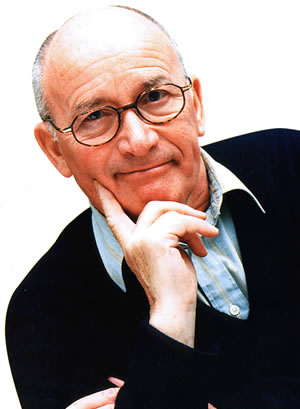
JAK THE CARTOONIST
JACKSON,
Raymond Allen, (JAK)
Born 11th March 1927-Died 27th July 1997
Cartoonist, Evening Standard, from 1952 to 1997.
Son of Maurice Jackson and Mary Ann Murphy.
Married 1957, Claudie Sidonie Joséphine Grenier.
One son,(Patrick), 2 daughters (Dominique, Nathalie).
Education: Lyulph Stanley Central; Willesden School of Art, (NDD); Army, 1945-48;
General artist, Link House Publishing, 1950-51; Keymers Advertising Agency,
1951-52; Evening Standard, 1952-1997-, Publications: JAK Annual, 1969-1997.
EXTRACTS
FROM THE MEMORIAL BOOK
FOREWORD
By PETER MCKAY
The cartoonist is every proper newspaper’s most prized contributor,
able to lift the daily torrent of news and comment on to another stylish,
witty plane. It is also the hardest job of all. Editors, sub-editors, writers
and photographers have all kinds of support systems. Everything they do individually
can be sharpened and improved by colleagues. Cartoonists have their pens,
their paper and their brains.
Each day, be it dull or historic, they must fashion from events some timely
joke, draw it up and finish before the presses are ready to roll. No one can
help them. They stand or fall by their own efforts. The lonely pressure is
great but they must train themselves not to think about it. The perfect result-
a funny cartoon, instantly understandable-always looks simple but it’s
a work of intense and detailed concentration.
Jak was not an introspective man but he was a thoughtful one. He was interested
in politics and philosophy. As a native-born Londoner, he was cynical of all
politicos, wondering why (as he saw it) it was always necessary for them to
lie. But he liked and admired the strong characters among them- delighting
in Margaret Thatcher, regretting John Major’s inability to project strength
and, towards the end of his life, not having made up his mind about Tony Blair.
The cover drawing for his 1987 annual shows a handbag-waving Mrs Thatcher
chasing a huge crocodile back into its pool.
Some cartoonists seek to charm us, especially on slow days, with the kind
of coy drawings over which we’re expected to explain:”Ah, isn’t
that nice?” Jak had no time for such sentimentality. He was always out
to find the killer joke, the belly laugh. If his drawings seemed more hard-edged
and news-related than those of his rivals, perhaps this was because he sat
among Evening Standard journalists early in the morning as he read the papers
and absorbed their cynical banter and gallows humour. He once captured, in
all its idiocy, the long-running row over how the 180-mile-an-hour Eurotrain
would have to go slower when it got on to old-fashioned English rails by drawing
the massive, sleek French locomotive meeting, nose-to-nose at Dover, a Victorian
tram car.
He knew what made us laugh involuntarily, not what he thought ought to be
funny. For more than forty years he drew for the Evening Standard and (for
the last 10 years) The Mail on Sunday, a prodigious output of around 10,000
drawings. His relationship with the editors who came and went was friendly
but firm: each day he gave them about half a dozen roughs to choose from,
and accepted without complaint the decision they made, even if they had failed
to pick his favourite. But he did not welcome any further participation from
them in the joke process. All he required was that they laughed and pointed
to the rough that tickled them most.
Jak’s background wasn’t posh but he bore no resentment against
those who were grand, either in life or in his drawings. His upper-class characters
were always drawn with fondness-great, moustachioed belted earls grasping
brandy glasses in imposing libraries whose sons called Tarquin said,”
I say, pater”. Or gentlemen’s club types in evening dress demonstrating
their bafflement with modern life and news. He loved the company of military
types, particularly the SAS who with him began Jak’s Black Pudding Club.
THE JAK I KNEW
By ANGUS MCGILL
There have been three major political cartoonists in the lifetime of the oldest
inhabitant and, as you might expect, all made their great reputations at the
Evening Standard. First came Low, hugely serious, a man who could make or
break political reputations, a power in the land. Then after a short gap,
there was Vicky, highly strung, passionately principled, personally feeling
every injustice in an unjust world. Then came Jak.
Jak was nothing like the other two. They were firmly Left-wing. He was, by
and large, somewhere on the Right. They were totally committed to the causes
that drove them. You never quite knew what to expect from Jak. They wanted
to change their readers’ minds. Jak wanted them to laugh.
From time to time a truly shocking event would provoke a serious drawing,
the more effective for being rare, but for 31 years, with the news pages full
of gloom and disaster, cheerfulness kept breaking out in the paper’s
political cartoon. When in 1997 Jak’s drawing had to stop it was the
jokes that were remembered in the torrent of readers’ letters. Good
humour can change minds.
Jak was born in Marylebone in the heart of London, the son of a tailor, Maurice
Jackson (born Jakobovitch). The family was bombed out during the Blitz and
moved to a nice little house in Notting Hill Gate in time for Jak to take
his 11-plus. He failed. Happily there was an art test too, which would get
him a place at Willesden Tech at 14. He sailed through. The deal was a general
education until 16 and a full-time art course until 18. Then the Army got
him.
He was called up at the beginning of 1945 and spent three years in Italy,
Egypt and Palestine, doing, as he put it, nothing more damaging than teaching
art. He was Sergeant Jackson when he was demobbed and then it was back to
Willesden Art School for two years of serious training in commercial art with
the National Diploma in Design at the end of it.
That and his outstanding student portfolio, got him a job straightaway. He
was taken on as a general artist by Link House Publishing and then moved on
to richer pastures of an advertising agency where he was quite a sensation.
He would arrive at work in an old taxi painted bright yellow and before long
he arrived with an arm in plaster after a workout at judo the night before,
just what an artist needs.
He arrived at the Evening Standard in 1952 as a general artist, doing any
drawing the paper needed, decorations for the TV page, illustrations for features,
caricatures of people in the news, and an increasing number of pocket cartoons.
It was the cartoons that launched him on his life’s work.
In 1966 Vicky, in the grip of a dreadful depression, took an overdose of sleeping
tablets and Jak took over. The great man’s shoes were not easy to fill
and the editor of the day, Charles Wintour, had hesitated. He thought Jak
was too lightweight, not a political animal, but Wintour was persuaded and
Jak got his chance. He took it with both hands. For the next 31 years he became
an integral part of the Evening Standard.
He soon established a working style that he maintained until the end. He was
a tremendously sociable man and did not want a studio of his own. He preferred
to occupy a large office, half of which was his. The rest was the territory
of the other artists. There he worked beside the window behind a barricade
of shelves and the sloping slab of his drawing board, always sure of plenty
of company. The room was known to everyone as Jak’s Cabin and there
were items there not found elsewhere on the editorial floor. A fridge was
an early addition to the scene, filled with Champagne.
A squashy black-leather sofa arrived for his afternoon naps. A rather ramshackle
bar was rigged up, the only one in the office.
Here he was to be found at 7am every day, whatever the rigours of the night
before. First there were the morning papers to read. Then, perched up on a
high stool at his drawing board, he would sketch out the roughs of five or
six ideas and by 9am was presenting them to the editor. There was usually
at least one among them that could send them both to jail.
Successive editors reacted in their respective ways. Some held their heads
in their hands. One looked carefully at each rough in turn with no expression
at all. Others, and these were the ones Jak liked, actually laughed from time
to time, but all picked a cartoon in the end and off went Jak to his cabin
to draw it up.
This took every minute of the rest of the morning. As the hours passed Jak,
now in shirt sleeves and wearing an extremely practical butcher’s apron
which gave him a long pocket for this and that, would be drawing, drawing,
drawing.
Taken together, his collected works form a ribald history of our time, great
events and small jostling cheek by extravagantly exaggerated jowl, each drawing
populated by a wondrous galère; royals, politicians of every kind,
assorted presidents, prime ministers, industrialists, models, rising stars,
falling stars, Irish navvies, gay vicars, tarts in fishnet stockings, all
with only three fingers and none of them, to tell the truth, looking their
best, bellies this way, noses that.
Jak had his favourites and they became stars in their own right. He loved
dowager duchesses, shelf-like bosoms decked with the family jewels; Irish
builders, massive hands grasping pints of Guinness; retired colonels apoplectic
in front of vast fireplaces. Above all, perhaps, were the bimbos, long-legged,
high-breasted, full of Western promise. Jak was quite impartial. The bimbos
got off lightly but he had a go at everyone else. His victims loved it. Usually.
Innocent onlookers were constantly amazed that people satirised so wickedly
couldn’t wait to buy the originals.
A Jak cartoon featuring your very good self became, indeed, a badge of celebrity.
Do you have one in your downstairs loo? Oh dear ! Never mind.
It is not known where the Queen hangs her Jak cartoons but all we can say
is that several have gone to the Palace. There used to be an unwritten prohibition
on caricaturing the Royal Family. Jak claimed to have been the first to break
it. Was he marched to the Tower? Not at all. The Queen, he found, didn’t
mind a bit.
One company of men who never complained was the SAS Regiment. At all times
Jak couldn’t wait to get abroad and he made a number of hugely successful
sketching tours for the Evening Standard. They took him, among other exotic
places, to Borneo where he came face to face, for the first time, with an
SAS trooper. He was being tattooed by a Dyak head-hunter with a bottle of
Quink. The trooper and his mates took him under their wing. He visited the
tribes with them, had a marvellous time and started a close friendship with
the whole regiment that lasted the rest of his life.
He started drawing men in black after the Iranian Embassy siege and they often
starred in his cartoons after that. Then the Colonel of the Regiment bought
the originals for the mess and called into Jak’s Cabin with the Regimental
Sergeant Major to pick them up. Jak took them out to lunch. This went so well
that many other lunches followed. At one of them, at the Savoy Grill, the
Sergeant Major asked if they did black pudding. Certainly they did. A noble
black pudding arrived and Jak’s Black Pudding Luncheon Club was born.
It was, and still is, a most exclusive fraternity. It has an emblem- a winged
black pudding. It has a tie and a flag and just 22 members, and some of the
lunches have been known to go on until the following morning. Black pudding
is always served. The club continues.
He had, actually, a host of other recreations, some of which I can mention.
Sketching, for instance. He took watercolours with him whenever he went abroad
and very holiday produced a clutch of accomplished paintings.
The constitution that had been one of the wonders of our time had lately started
to show signs of wear. He needed and got a new hip, stumped around the office
on a stick for a while and made a wonderful recovery. Then there was trouble
with his heart. He had a heart-valve operation in July (1997) and this, too,
seemed a total success. Within days he was out of hospital and back home.
On his last Sunday he had walked on the common( Wimbledon), as he loved to
do and was sitting with Claudie (his wife) in his garden on that lovely summer
afternoon when she saw him slipping away.
He died, the ambulance on its way, in her arms.